The Ski Season in Photos #12

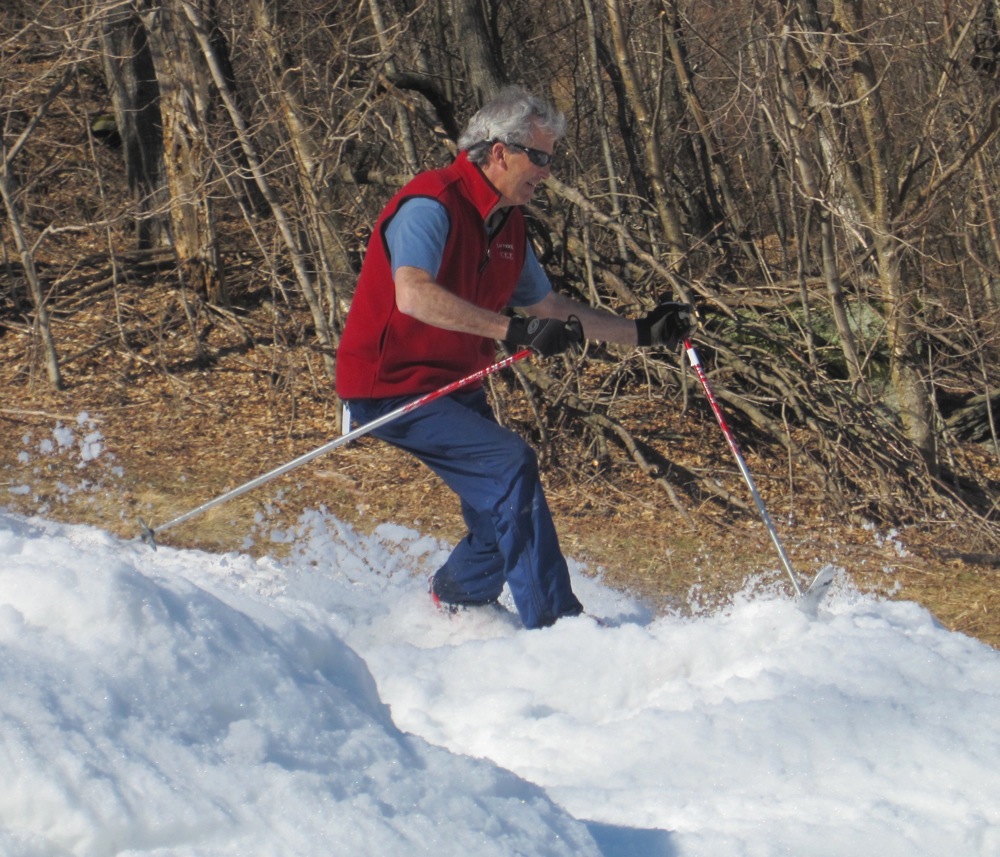
Bumpin Riley • Plattekill Mtn • March 19, 2012

After the snow gods delivered a solitary week of winter across the northeast, a cruel blow was served: the winter hating heat wave. In mid-March temperatures soared to mid-summer levels reaching in the 70s and 80s for nearly two weeks.

Already limited snowpacks began to vaporize and mountains across the state scrambled to figure out how they could cram in the normally extended party that constitutes the spring farewell to the lift-served season.
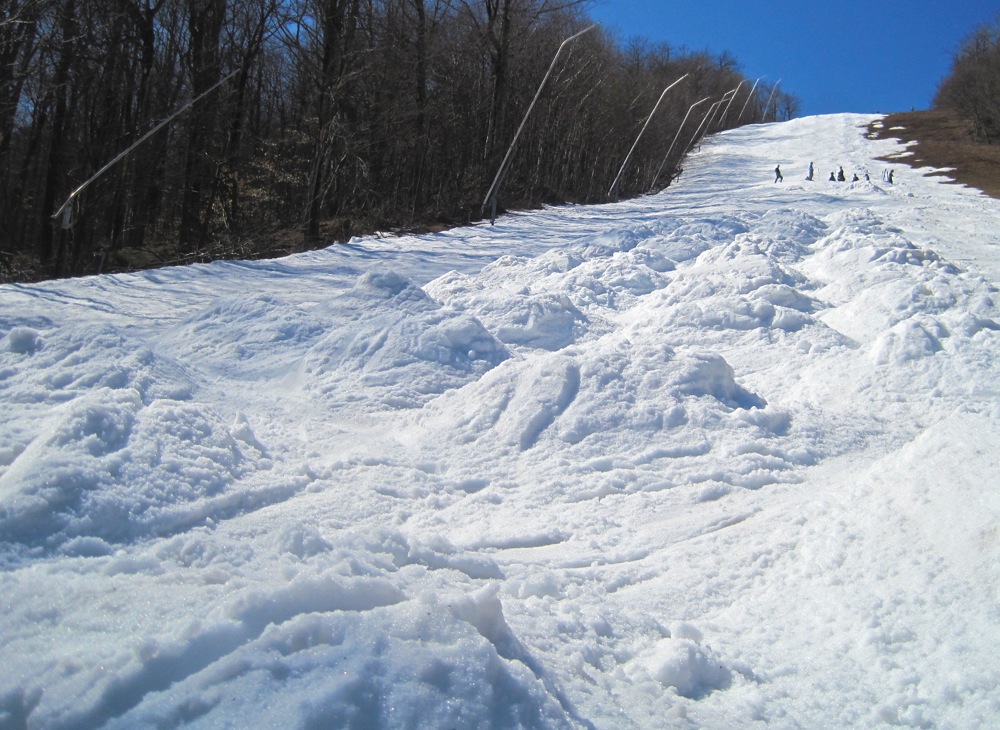
Plattekill bumpfield

The jump from winter to summer coincided with St Patrick’s Day and many mountains scraped together whatever snow they could find and scheduled parties for the weekend of March 19, 2012.  Plattekill unveiled an new annual event — a mogul competition — to take place at midday on St. Plattekill’s Day.

Continue reading →

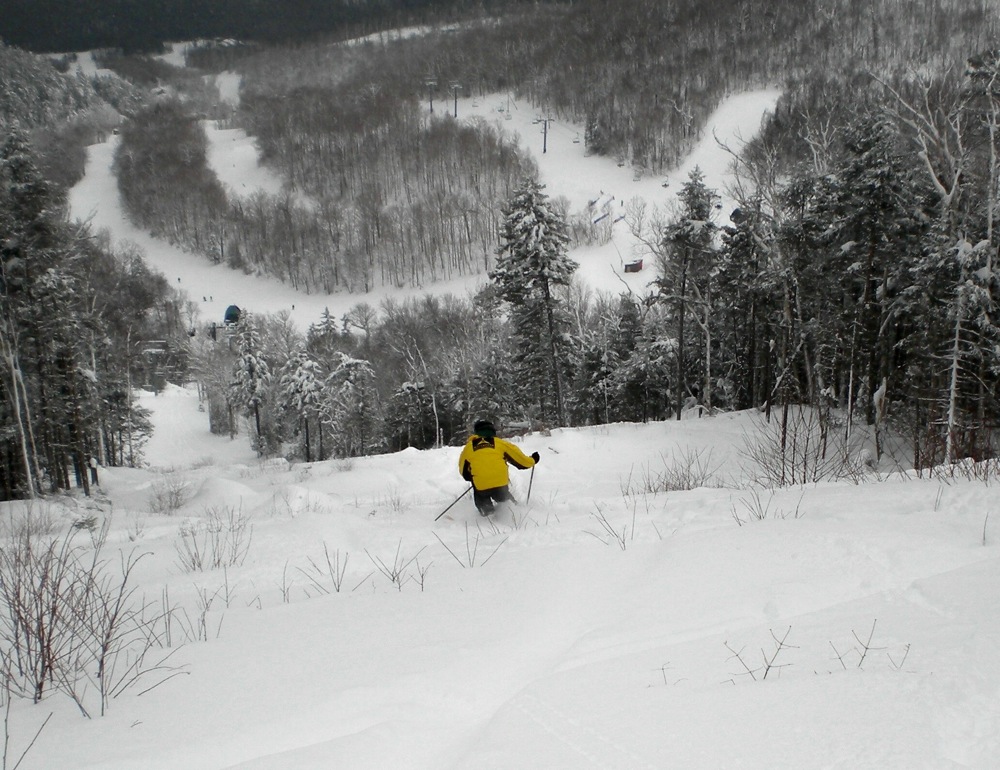
Snowmaking on Hoyt’s High

At this time of year in 2009 ORDA announced that snowmaking on Hoyt’s High — the signature expert trail on Lookout Mountain at Whiteface — would have to wait. The price tag for the project, estimated at $500,000 at that time, was too steep, when combined with reductions in state funding. Over the last two seasons, skiing on the trail has been limited to those days when the skies delivered enough natural snow to open the steep pitch.

Hoyts-High
Hoyt’s High on Feb 26, 2010

That is about to change. ORDA announced today that the construction of the snowmaking infrastructure is underway and will be completed by the beginning of the 2012-2013 ski season. From our conversation with Bruce McCulley this morning:

“We will be installing snowmaking on Hoyt’s High this summer. The pipe has started to arrive and we expect crews on site next week. This is a significant undertaking since the access is limited.

Continue reading →

The History of Ski Aerials


Dick Barrymore was a ski film pioneer who started making films at the 1960 Winter Olympics in Squaw Valley. He spent the next 30 years shooting around the world. He rarely had a script for his films — he captured the action as it unfolded and was a master of improvisation.

He did most of his own filming with a hand-held camera and did all the editing himself. He narrated and selected the music. And like Warren Miller, he traveled the country to do live narration of his films in theaters. From “powder to projector” Barrymore was involved in every part of the process.

Continue reading →